
 EN
EN
 ar
ar bg
bg hr
hr cs
cs da
da nl
nl fi
fi fr
fr de
de el
el hi
hi it
it ko
ko no
no pl
pl pt
pt ro
ro ru
ru es
es sv
sv tl
tl iw
iw id
id lv
lv lt
lt sr
sr sk
sk sl
sl uk
uk vi
vi et
et hu
hu th
th tr
tr fa
fa ms
ms hy
hy ka
ka ur
ur bn
bn mn
mn ta
ta kk
kk uz
uz ku
ku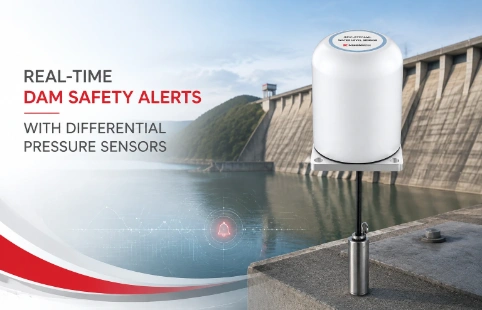
Real-Time Dam Safety Alerts with Differential Pressure Water Level Sensors
Key Takeaways An alert chain needs more than a sensor: define field in...

MEMS Accelerometer Working Principle Explained
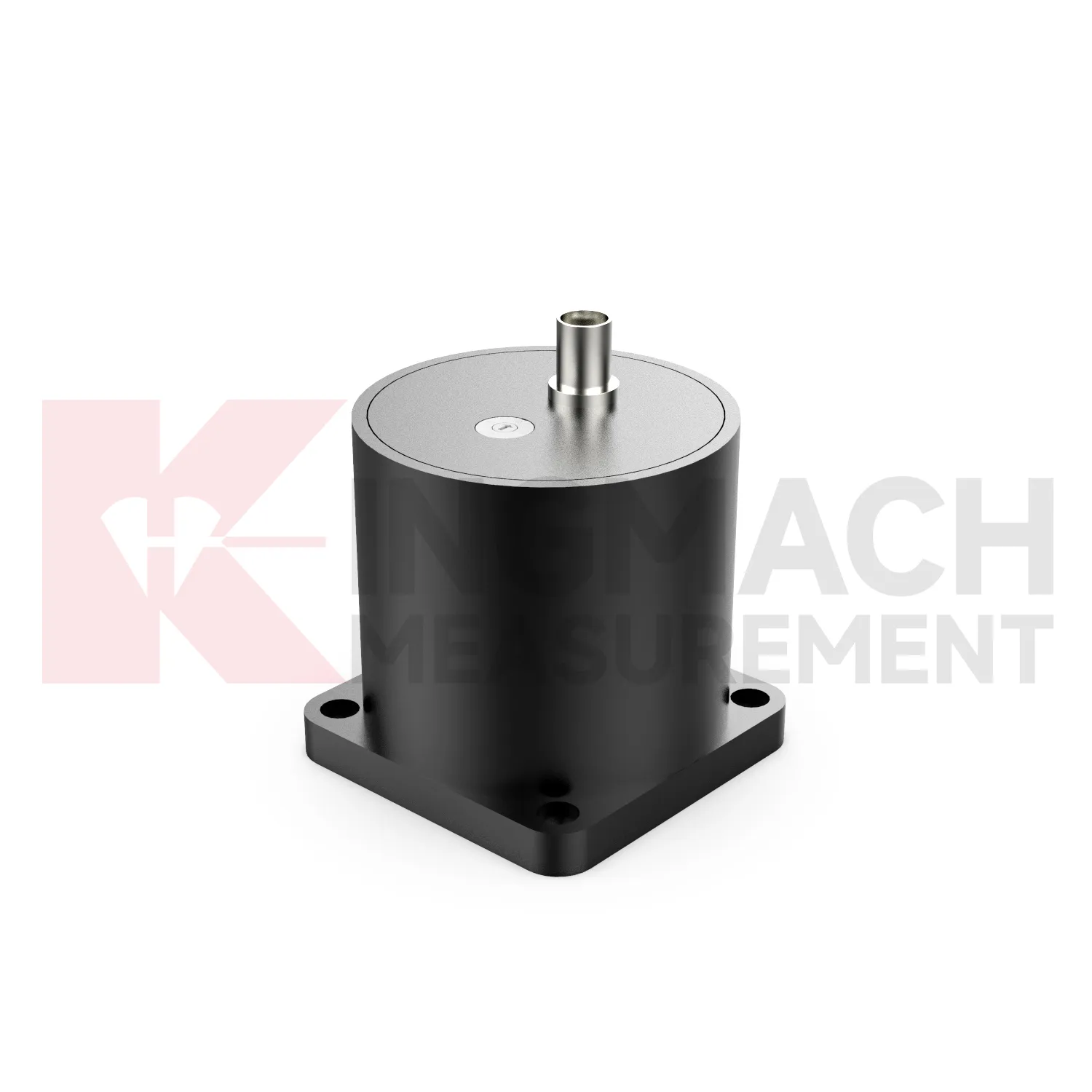
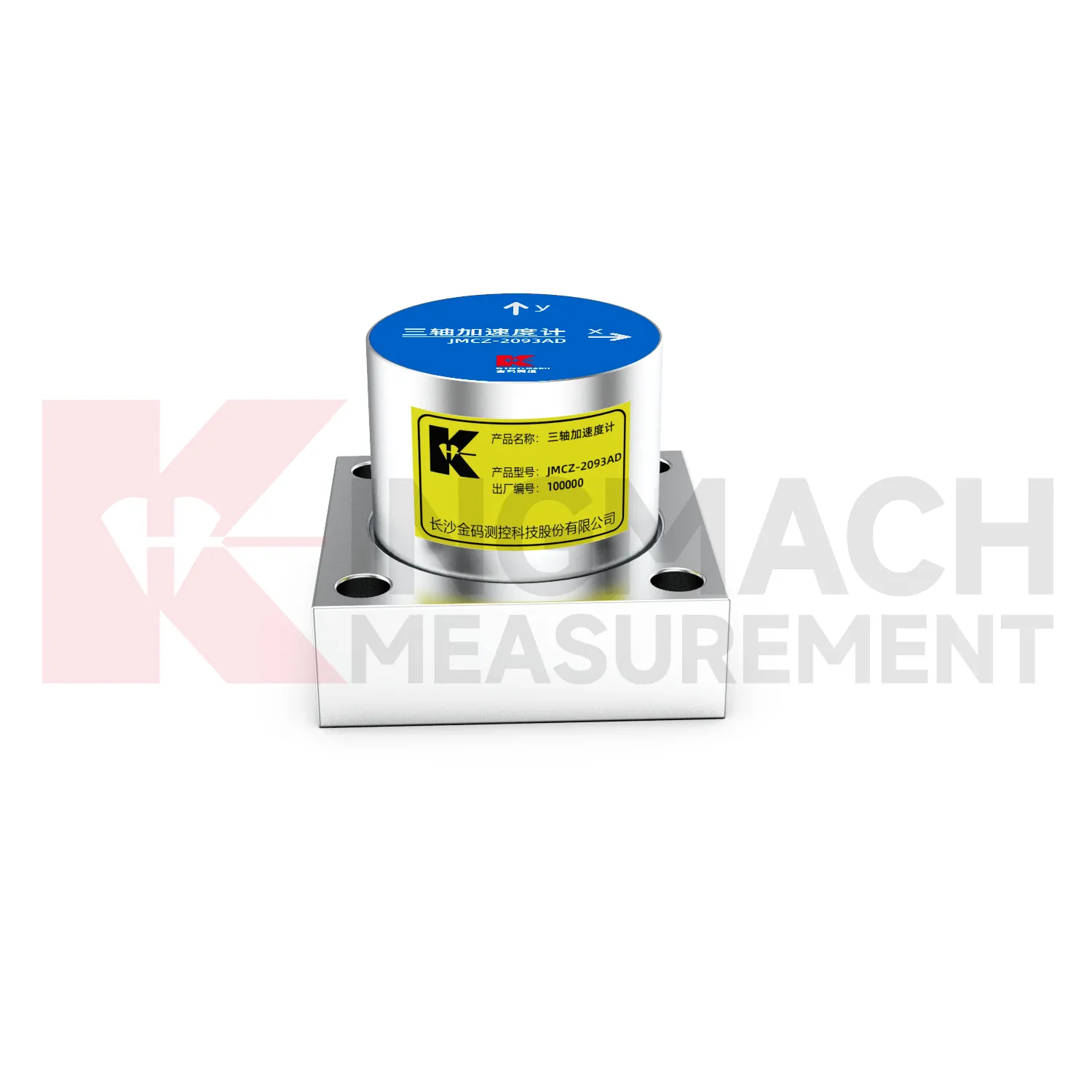
A MEMS accelerometer measures acceleration by detecting the displacement of a microscopic proof mass etched into silicon. When the sensor accelerates, inertial forces push the mass sideways; on-chip capacitive combs or piezoresistive strain gauges pick up that motion and turn it into a voltage. Kingmach relies on capacitive MEMS designs for most geotechnical instruments because they drift less with temperature and resolve down to micro-g levels. That matters in tunnels, dams, and landslide zones, where slow movements need to be caught long before they cause trouble. Our engineers match the working principle to the job: capacitive bulk-micromachined cells for tilt and low-frequency vibration, higher-g piezoresistive variants for impact monitoring. The signal then passes through an ASIC for conditioning and output over a standard current loop or digital bus. The result is a sensor that fits in a compact IP68 housing, runs on a few milliamps, and connects directly to your data logger without extra signal processing. That is the working principle in practice, stripped of textbook diagrams and put to work on-site.
Technical Detail
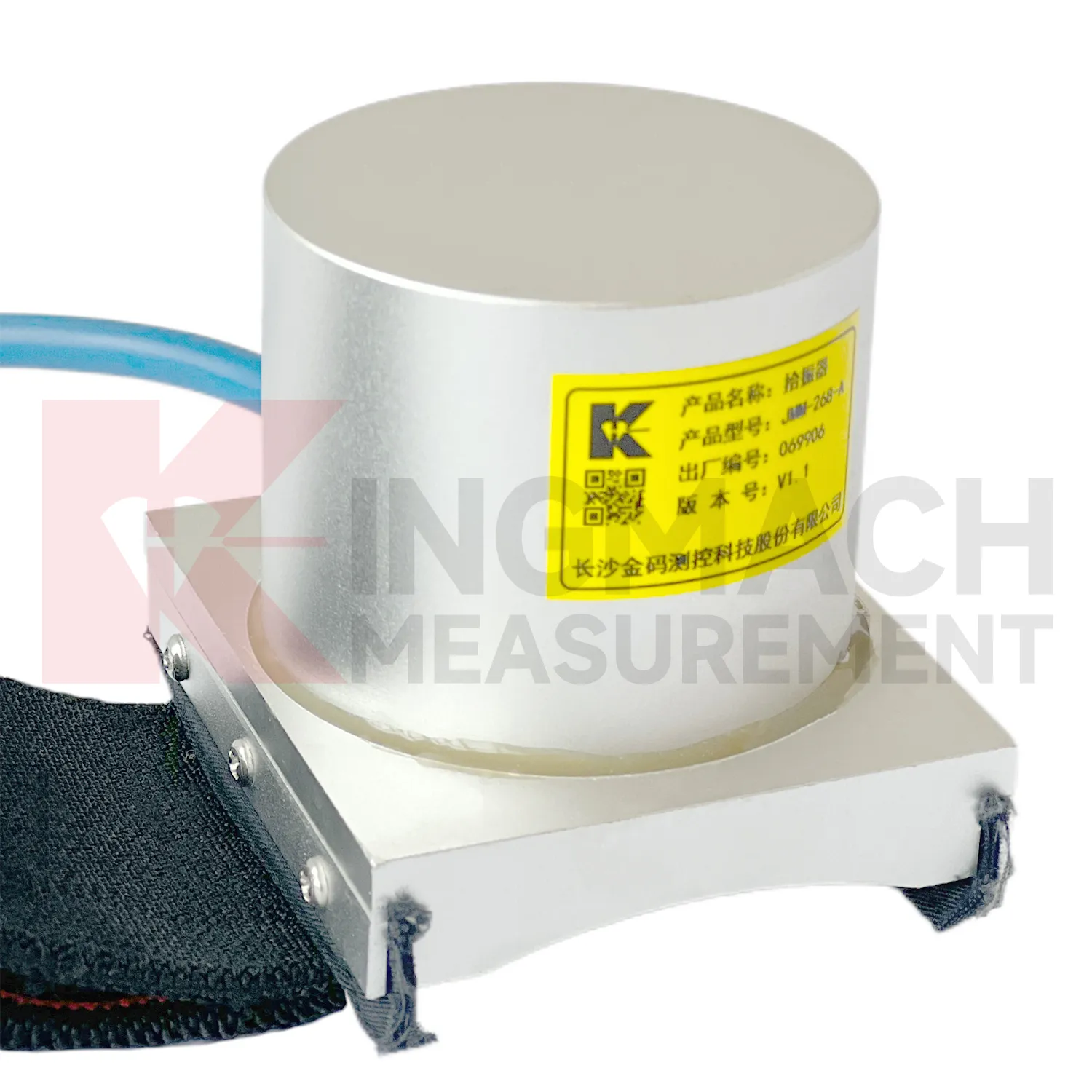
Every MEMS accelerometer starts with the same working principle: a suspended proof mass moves relative to fixed electrodes, changing capacitance. However, getting repeatable measurements out of a structure-monitoring installation takes more than textbook physics. Kingmach builds its capacitive MEMS accelerometers around low-noise ASIC readout chips and thermally compensated mechanical structures. The oscillator frequency and electrode gap are trimmed at the factory to yield sensitivities better than 1 mg/√Hz, so long-term tilt monitoring does not require averaging over hours. The sensing element is hermetically sealed in a ceramic package, then embedded in a stainless steel housing rated IP68. That housing mounts on a steel plate with adjustable legs, speeding up alignment on uneven concrete surfaces. Because the working principle relies on displacement, not piezoelectric charge, our sensors return true DC response. They track static gravity and slow creep just as faithfully as dynamic vibration up to 1 kHz. In practice, a Kingmach MEMS accelerometer is used for structural health monitoring of bridges, retaining wall tilt logging, and seismic switch applications. The standard output is 4–20 mA, RS485, or CAN, eliminating the need for charge amplifiers or separate signal conditioners. Power consumption stays under 15 mA at 12 V, so solar-powered remote stations can run for weeks on a modest battery. For projects requiring a specific range, filter bandwidth, or mounting base, we modify the ASIC settings and mechanical enclosure during order. The working principle stays the same across all variants, which means one calibration procedure and a common set of commissioning checks for every sensor on site. Support engineers provide wiring diagrams and commissioning scripts for Campbell Scientific, Senceive, and other common loggers. If the site has fiber, we can supply an optical version that modulates laser intensity with the proof mass, keeping the identical mechanical core. This focus on the physical sensing mechanism, rather than dressing it up with marketing terms, is why installers and consultants who have dealt with drifting piezo sensors often switch to Kingmach for long-term projects.
News
Key Takeaways An alert chain needs more than a sensor: define field in...
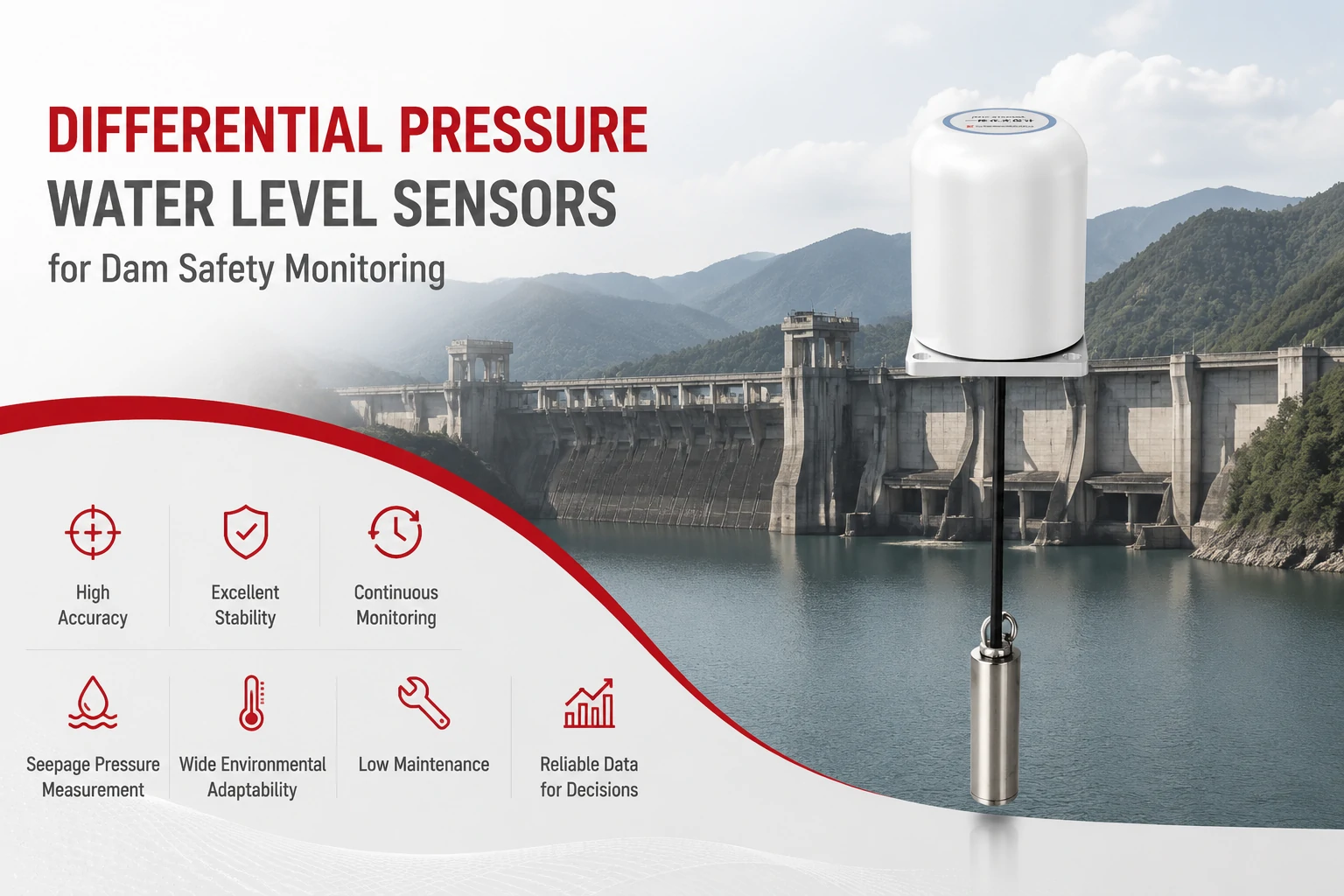
Key Takeaways The strongest fit is usually a confined, submerged, or s...
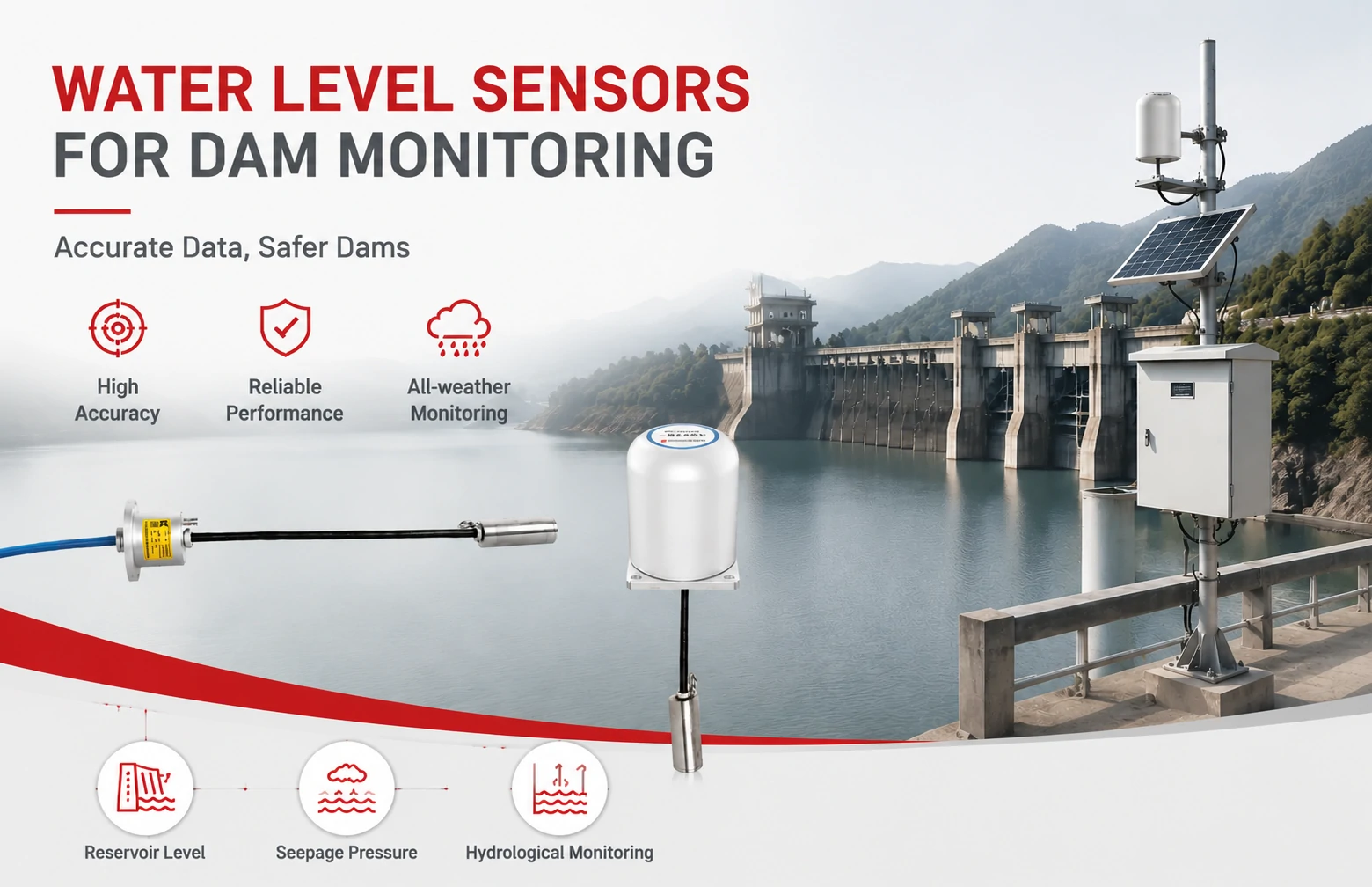
Kingmach Water Level Sensors for Dam Monitoring: A Buyer's Guide to Differential Pre...
Products
FAQ
It measures the change in capacitance between a moving proof mass and fixed plates. When acceleration pushes the mass, the gap alters, shifting the capacitance. An on-board ASIC converts that capacitance delta into a voltage proportional to acceleration. Capacitive designs dominate geotech because they retain DC response and are less sensitive to temperature swings than piezoresistive types.
A servo accelerometer uses a feedback coil to hold the proof mass still and measures the current needed. That gives extremely low noise but at a larger size and higher cost. MEMS units are smaller, draw a fraction of the power, and cost significantly less, while still offering micro-g resolution. For most distributed monitoring arrays, MEMS strikes the right balance of performance and budget.
No. Every sensor outputs either a 4–20 mA current loop, RS485 Modbus, or CAN bus signal. The ASIC inside handles all the capacitance-to-digital conversion and filtering. You can wire it straight into a standard data logger or PLC without external charge amplifiers or custom interface boxes.
Yes, as long as the sensor has DC response. The capacitive MEMS cells we use track gravity, so you get static tilt angle and low-frequency vibration in one device. The same chip can register a sub-degree tilt over weeks and capture a passing truck's vibration up to several hundred Hz. You choose the onboard low-pass filter setting during ordering to meet your bandwidth needs.
Verify the IP rating matches the mounting location. Our standard housings are IP68, but cable gland tightness and conduit seals still matter. Always let the sensor reach thermal equilibrium after unpacking; an initial offset drift of a few mg is normal for the first half hour as the package stabilizes. Use the provided bubble level on the mounting plate for coarse alignment, then fine-tune with the digital reading. We advise a quarterly bias check by flipping the sensor 180° if the site allows.
Share your product type, target capacity, and application requirements. Our team can review the details and recommend a practical next step.
If you are interested in our products or want to become our partner.
Please leave your contact information, our team will contact you as soon as possible.
Mail: [email protected]
Contact Us: +8613808434127
Address: No. 188 Tongzipo West Rd, Changsha, Hunan, China